Invoice Dispute Resolution
Context
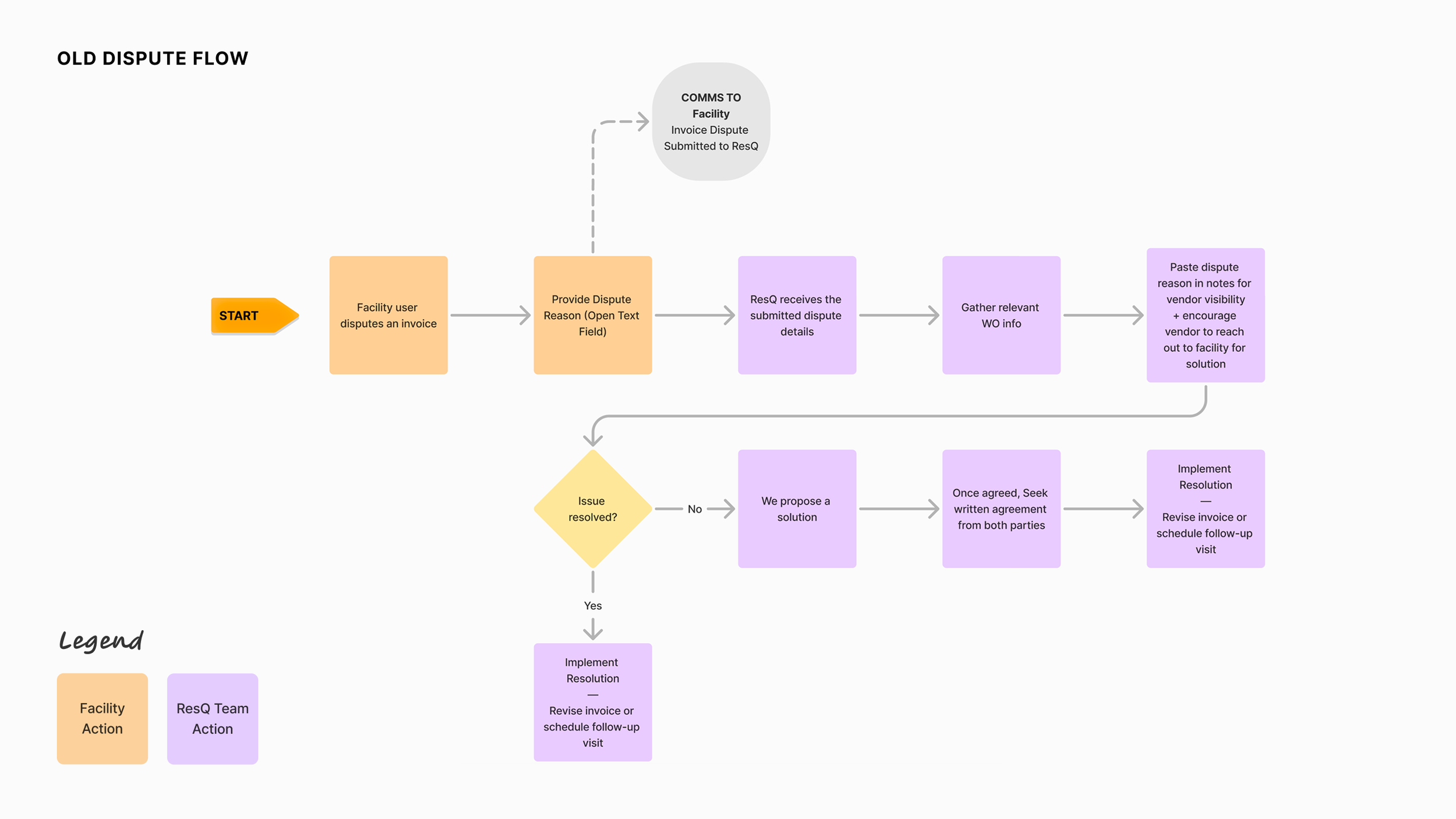
Customers frequently used the existing “Dispute Invoice” flow when they had questions or concerns about an invoice. Submitting a dispute automatically routed the issue to ResQ’s internal operations team, who would then investigate the issue and work with the vendor to resolve it. While this gave customers a clear path when something went wrong, it also positioned ResQ as the default mediator between customers and vendors—even for issues that could be resolved directly between them.
The problem
The existing experience created unnecessary friction across all three sides of the transaction. Customers had to rely on ResQ to resolve relatively straightforward invoice questions, vendors had limited opportunity to address issues directly with their customers, and the operations team became responsible for mediating disputes that didn’t always require intervention. The opportunity was to move resolution closer to the source: give customers and vendors the tools and context they needed to resolve issues themselves.
Proposed Solution
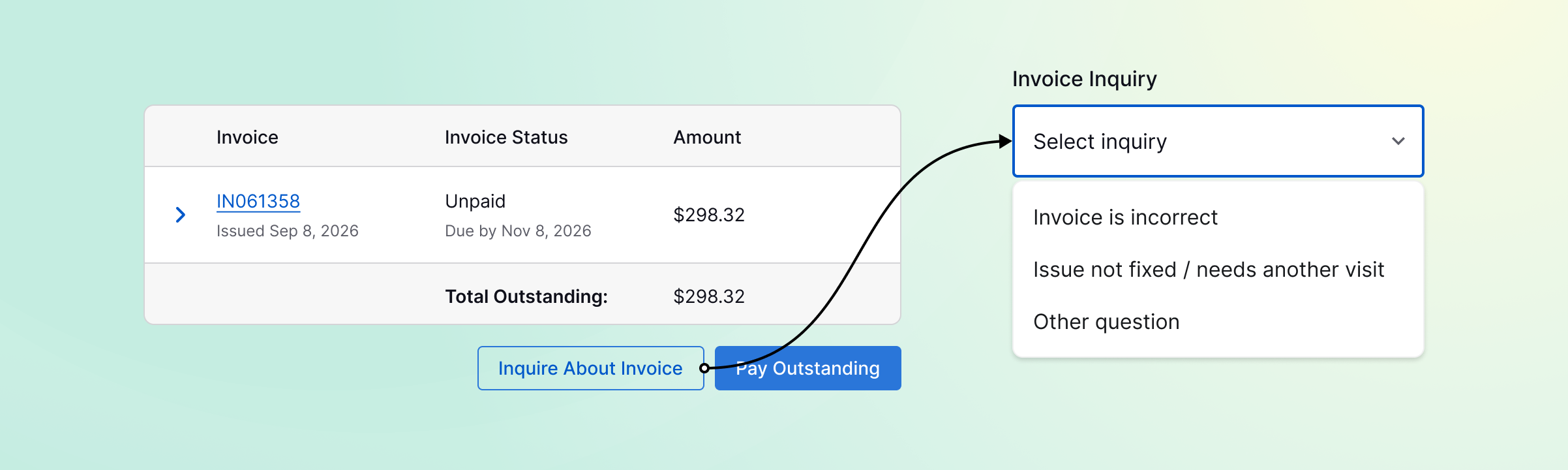
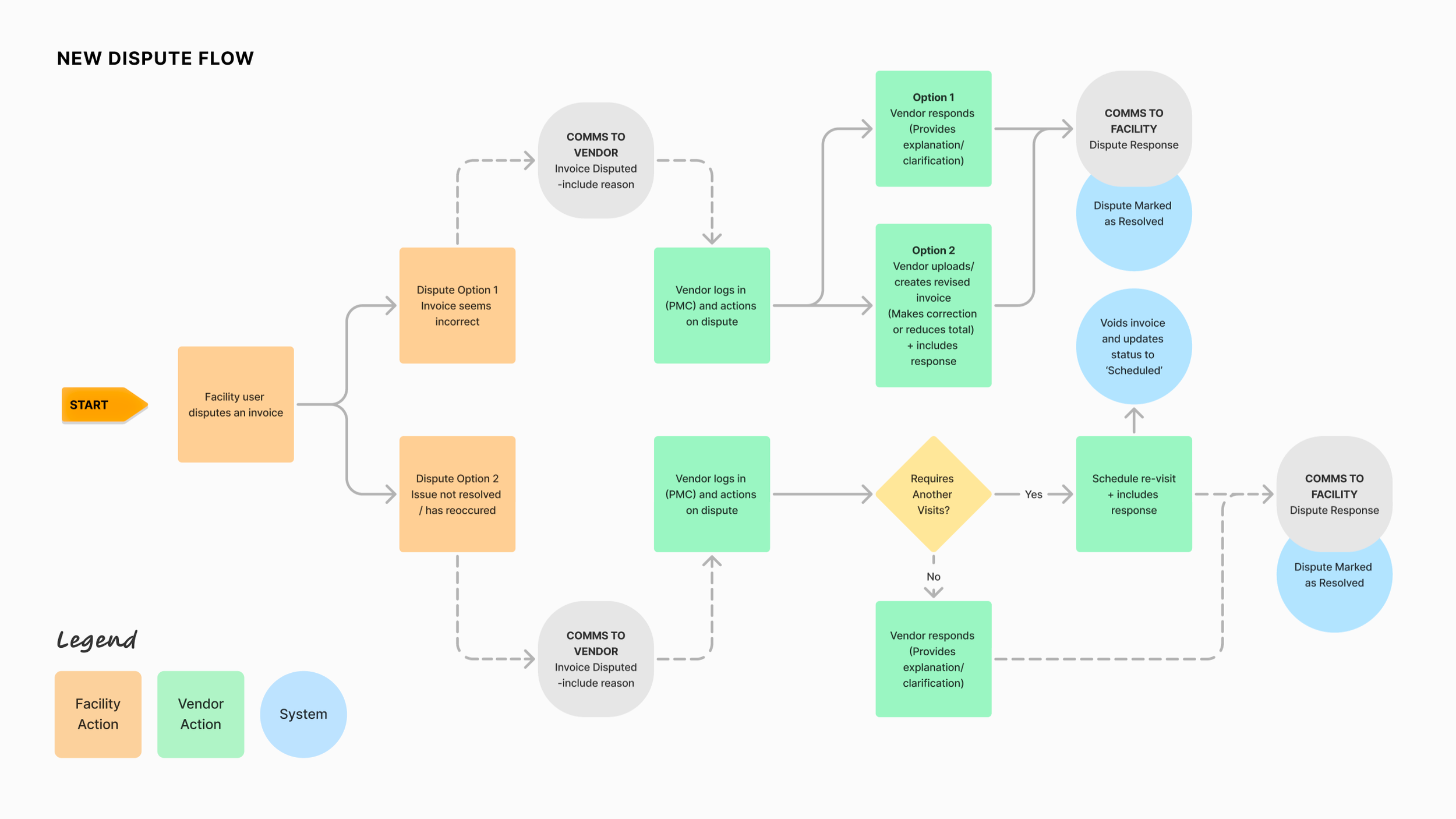
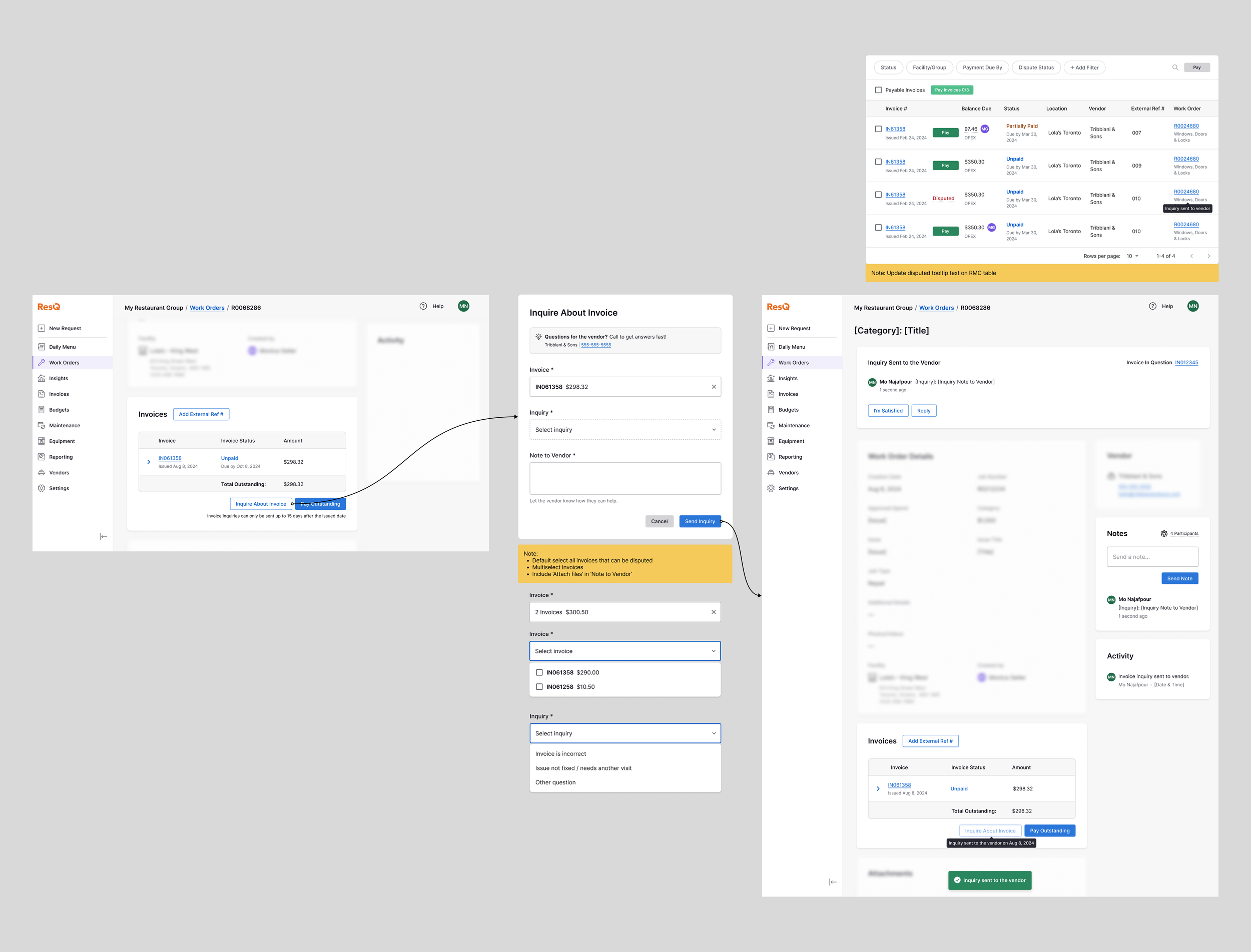
I redesigned the experience to remove ResQ from the resolution process entirely. A key part of the redesign was reframing “Dispute Invoice” as “Inquire About Invoice.” Looking at past disputes and speaking with the operations team revealed that many submissions weren't actually disputes—they were simply customers looking for clarification about an invoice. Treating every inquiry as a dispute unnecessarily escalated these conversations to ResQ’s operations team. By shifting the experience from dispute to inquiry, customers could communicate their specific needs directly to the vendor. The new experience then provided vendors with the appropriate tools and actions to resolve each inquiry themselves, without ResQ involvement.
The goal was to move from a three-way process involving ResQ to a direct customer-to-vendor conversation, giving both sides more ownership while eliminating unnecessary operational intervention.
Impact
85% reduction in operations time spent resolving invoice inquiries, eliminating the majority of manual intervention and allowing customers and vendors to resolve disputes directly in the product.
Reduced unnecessary escalations to ResQ’s operations team
Enabled faster resolution between customers and vendors
Reduced the operational burden associated with invoice disputes
Gave vendors more ownership over resolving customer issues
Created a more direct and transparent experience for customers
The inquiry type determines the resolution path.
To understand the most common reasons customers were disputing invoices, I reviewed past disputes and spoke with the operations team about the issues they encountered most frequently. This helped identify three core inquiry types:
Invoice is incorrect
Issue not fixed / Needs another visit
Other question
By introducing specific inquiry types, we could surface the appropriate actions directly in the product, giving vendors the tools to resolve each issue themselves without ResQ involvement.
Vendor receives the inquiry
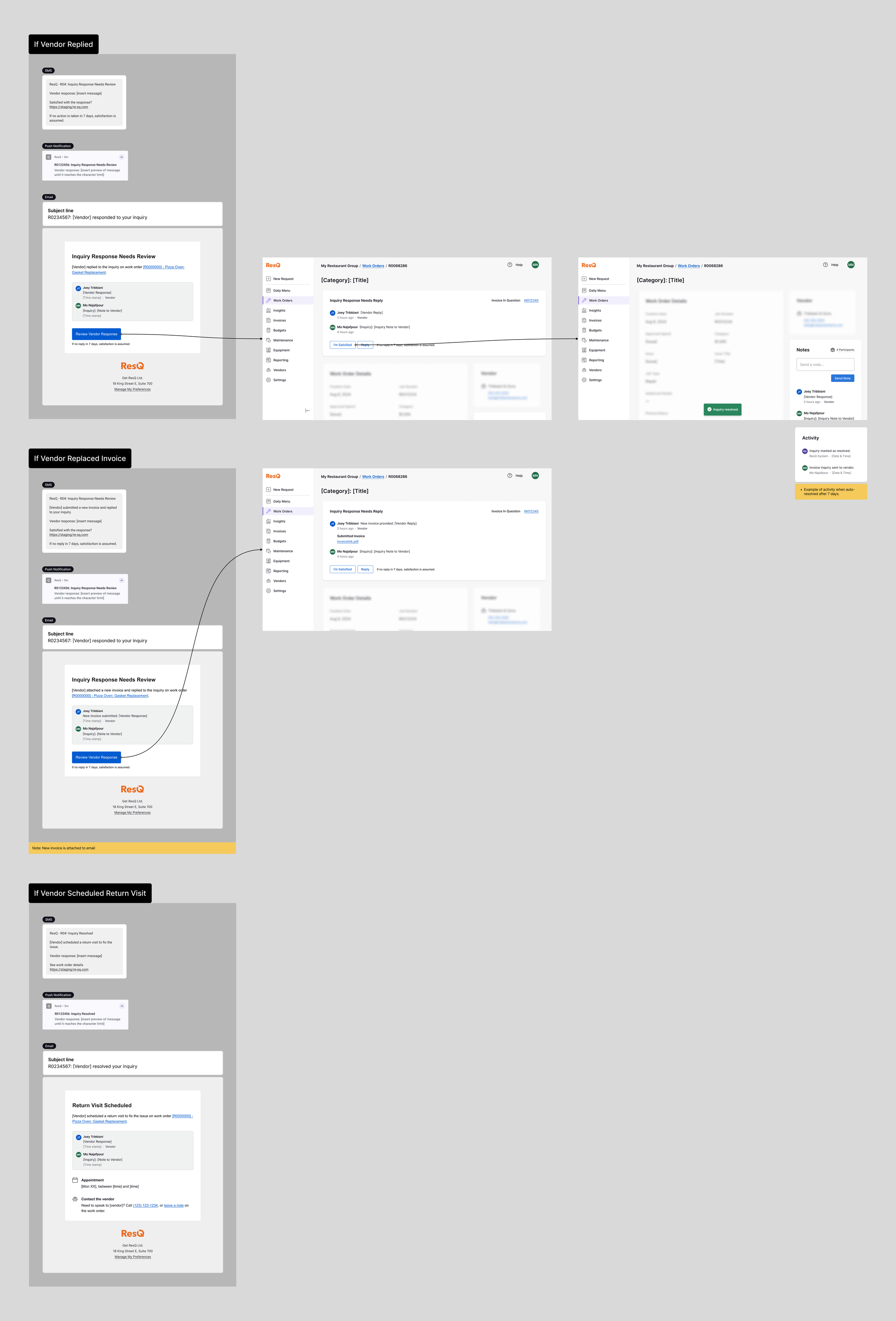
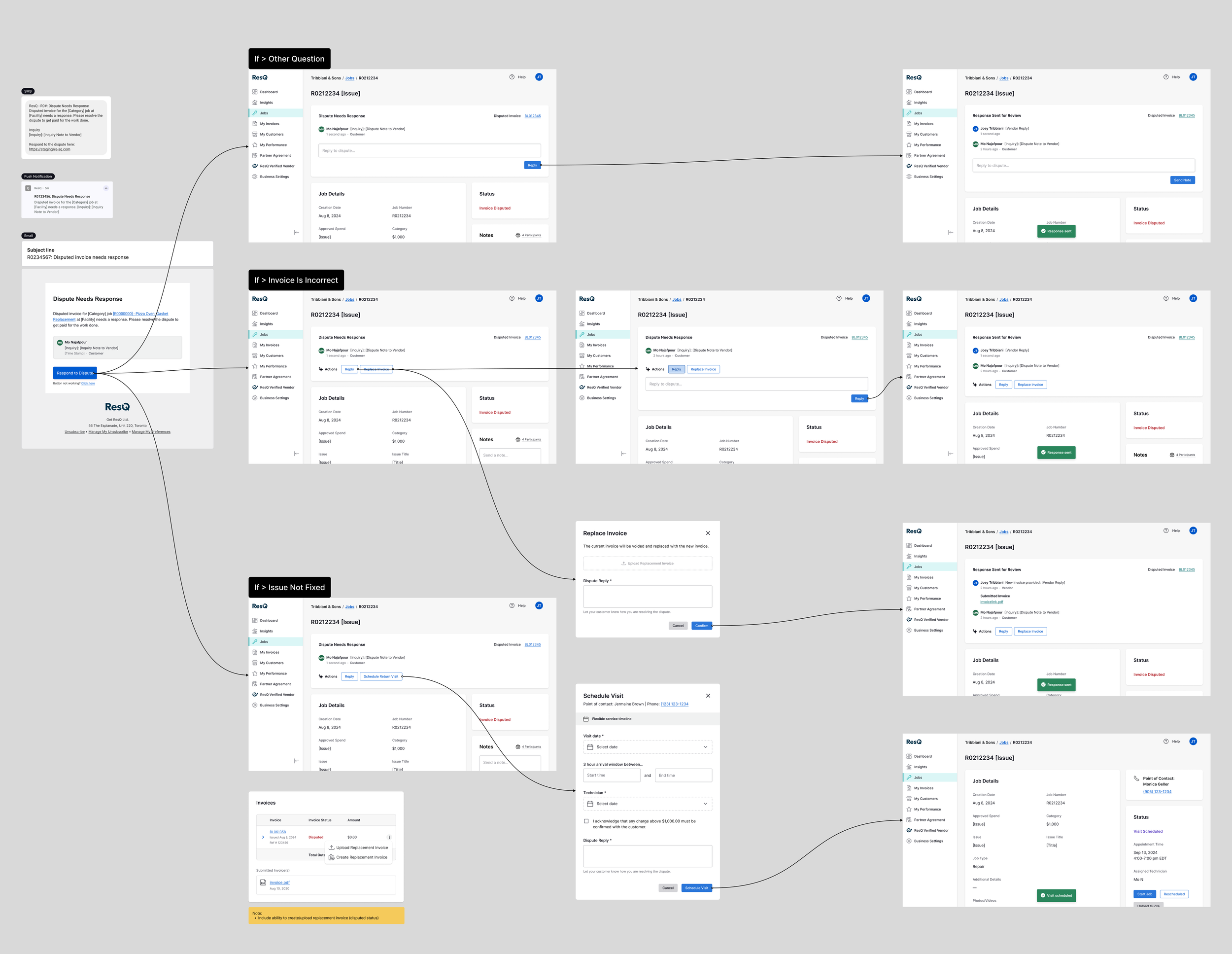
Once a customer submits an inquiry, the vendor receives a notification with the relevant invoice context and is directed to the job details page to resolve it.
The job details page surfaces the appropriate actions based on the type of inquiry submitted, giving vendors a clear path to respond.
Invoice is incorrect → Reply with clarification or resubmit the invoice
Issue not fixed / Needs another visit → Reply with clarification or schedule a return visit
Other question → Reply with clarification
This creates a direct customer-to-vendor resolution loop, with the right tools surfaced at the point of action.
Closing the loop
Once the vendor takes action, the facility user is notified and can review the response directly in the product. If the issue is resolved, they can confirm and close the inquiry. If not, they can reply and continue working with the vendor until the issue is resolved.